
On-page SEO and internal linking help search engines understand your website, guide visitors to useful next steps, and improve the performance of pages you already have. When pages are structured clearly, connected strategically, and built around buyer intent, they are more likely to support visibility, engagement, and lead generation.
Key Highlights
- On-page SEO improves the elements visitors and search engines use to evaluate a page, including headings, content, internal links, metadata, and calls to action.
- Internal links help search engines understand relationships between pages and help users move through your website with less friction.
- WSI notes that 60% of searches now end without a click, which makes every visible page and answer more important.
- AI Overviews appear in nearly half of informational searches, making clear structure and strong page-level context more valuable.
- Every page should act as both an information source and a conversion opportunity.
Why On-Page SEO Still Matters
On-page SEO matters because search engines and AI systems need clear signals to understand what a page is about, who it helps, and why it deserves visibility. For growing businesses, strong on-page optimization also improves the visitor experience, making each page easier to scan, trust, and act on.
A strong on-page strategy starts with clear content, descriptive headings, useful internal links, and a conversion path that matches the visitor’s intent. This fits directly with WSI’s Adaptive Search Everywhere Optimization approach, where visibility depends on whether your business can be found, understood, trusted, and chosen across modern search experiences.
Search has changed from simple keyword matching to context and intent. WSI’s own research-based guidance notes that traditional rankings are no longer the only goal because AI summaries, third-party mentions, and zero-click behavior now influence how buyers discover businesses.
What On-Page SEO Includes
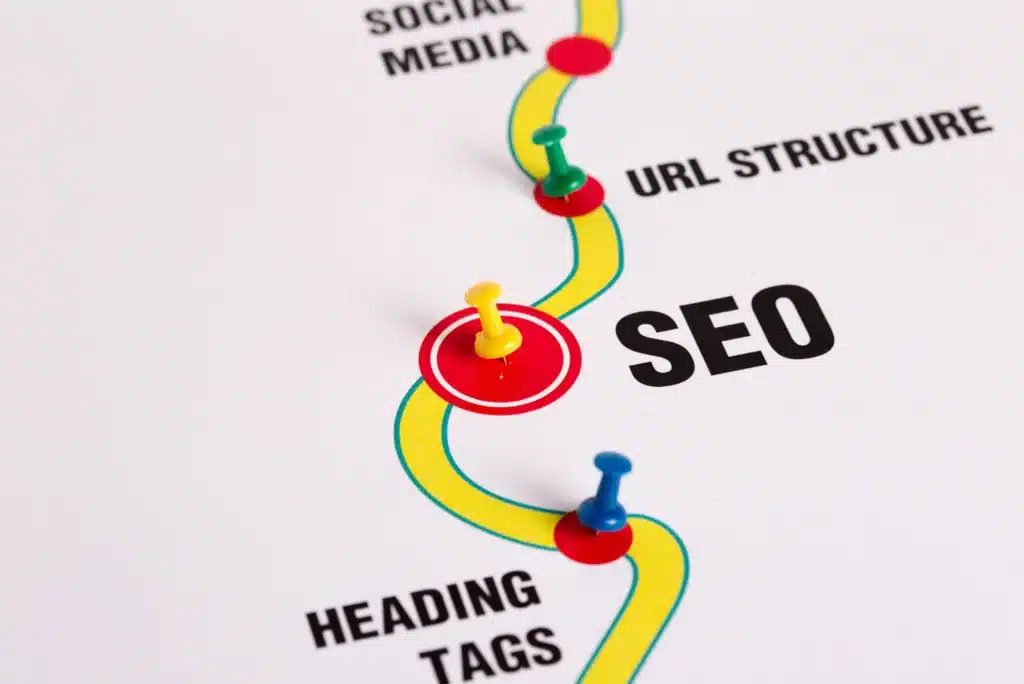
On-page SEO includes the visible and behind-the-scenes elements that help a page perform in search and support visitor action. This includes page titles, meta descriptions, headings, keyword alignment, content depth, image alt text, internal links, schema, and user experience signals.
The goal is not to force keywords into a page. The goal is to make the page easier to understand, more useful to visitors, and more aligned with what buyers are trying to accomplish. That means every section should answer a real question, remove confusion, or move the visitor closer to a logical next step.
Common on-page SEO elements include:
- Clear page title and meta description
- One focused primary topic
- Helpful H1, H2, and H3 headings
- Short, scannable paragraphs
- Relevant internal links
- Descriptive image alt text
- Strong calls to action
- Structured answers for common questions
This is especially important as AI-powered search experiences reward pages that provide direct, credible, and well-organized answers.
Why Internal Linking Supports Better Search Visibility
Internal linking supports SEO by helping search engines understand how pages relate to each other and which pages matter most. It also helps visitors move from one useful answer to the next, which can improve engagement and reduce missed conversion opportunities.
A page about SEO strategy should not sit alone. It should connect naturally to related services, supporting blogs, and deeper educational resources. For example, a service page can lead visitors to a blog about buyer intent, while a blog can guide readers back to a relevant service page when they are ready for help.
This is where WSI’s broader landing page optimization services can support both search visibility and conversion performance. A page may attract traffic, but if the next step is unclear or the internal path is weak, valuable visitors can leave without taking action.
WSI has also explained that search engines now interpret meaning, relationships, and intent, not just exact keywords. Internal links help reinforce those relationships across your website.
How to Build an Effective Internal Linking Strategy
An effective internal linking strategy connects pages based on relevance, buyer intent, and business priority. The best internal links feel natural in the sentence and help the reader continue learning or take the next step without interrupting the flow of the content.
Use this simple internal linking framework:
| Page Type | Link To | Purpose |
| Blog post | Related blog posts and service pages | Build topical depth and guide next steps |
| Service page | Supporting blogs, FAQs, and conversion pages | Improve trust and help buyers decide |
| Location page | Local service pages and proof-based content | Support local relevance and lead generation |
| Resource page | Strategic service pages and educational content | Move readers from learning to action |
A good example is connecting a page about on-page SEO to WSI’s blog on how search engines interpret buyer intent. That type of link helps readers understand why optimization must go beyond keywords.
Another natural connection would be WSI’s discussion of AI-driven search visibility, since internal linking supports the structure and trust signals that modern search systems evaluate.
Common On-Page and Internal Linking Mistakes
The most common mistakes happen when pages are optimized in isolation instead of as part of a connected digital strategy. Weak headings, duplicate content, missing calls to action, and random internal links can make a website harder for both users and search engines to understand.
Avoid these issues:
- Using the same anchor text repeatedly across many pages
- Linking only to the homepage instead of deeper service pages
- Adding links without clear relevance
- Overusing exact-match keywords
- Leaving older blogs disconnected from newer content
- Publishing pages without a clear next step
- Forgetting to update links when services or URLs change
Google’s guidance on helpful, people-first content reinforces the importance of creating pages that serve users first. Internal links should support that same goal by making the page more useful, not more cluttered.
How AI Search Changes On-Page Optimization
AI search changes on-page optimization because visitors may form an opinion before they ever click to your website. That means your content needs to be clear, credible, structured, and connected enough for both people and AI systems to understand quickly.
WSI has noted that nearly 60% of Google searches now end without a click. WSI also reports that AI Overviews appear in nearly half of informational queries, and that AI-referred visitors can be 4.4 times more valuable than traditional search users. These stats may change quickly and should be refreshed periodically.
For businesses, this means every page should be ready to answer direct questions, build confidence, and invite action. Strong on-page SEO helps AI systems understand your expertise, while internal links help show how your content fits into a broader topic.
Practical Steps to Improve On-Page SEO and Internal Links
The fastest way to improve on-page SEO is to review your highest-value pages first, then strengthen structure, clarity, internal links, and calls to action. Start with pages that already receive traffic or support important business goals.
Use this step-by-step approach:
- Identify pages with strong impressions but weak engagement or conversions.
- Review whether the title, headings, and introduction match search intent.
- Add or update internal links to related blogs and service pages.
- Replace vague anchor text with natural, descriptive wording.
- Break long paragraphs into shorter, more scannable sections.
- Add direct answers near the top of major sections.
- Include a clear next step that matches the visitor’s stage.
- Recheck performance after search engines recrawl the page.
This process helps your website become more useful over time without requiring every improvement to start from scratch.
FAQs About On-Page SEO and Internal Linking
How many internal links should a page include?
A page should include enough internal links to help the reader continue naturally, but not so many that the content feels crowded. For a 700 to 800-word blog, two to four strong internal links is often a practical starting point.
Should internal links always point to service pages?
No. Internal links should point to the most useful next resource. That may be a service page, related blog post, case study, FAQ, or contact page depending on what the reader needs next.
Does anchor text matter for SEO?
Yes. Anchor text helps search engines and users understand what the linked page is about. The best anchor text is descriptive, natural, and relevant to the sentence.
How often should on-page SEO be reviewed?
Important pages should be reviewed at least twice a year, or sooner if rankings, traffic, conversions, or buyer behavior change. AI search trends and zero-click behavior should be monitored more frequently because they are evolving quickly.
Final Thoughts
On-page SEO and internal linking are not small technical details. They shape how search engines understand your site, how AI systems evaluate your authority, and how visitors move from interest to action. When every page has a clear purpose, useful structure, and natural links to the next best resource, your website becomes easier to find and easier to trust.
If your pages are attracting traffic but not producing enough qualified leads, it may be time to review how your content, structure, and internal links work together. WSI can help you strengthen those connections and build a smarter path from visibility to growth.